How to Play Blackjack: Rules, Strategy & Odds Explained
Last updated: 6 April 2026
Blackjack is the most popular casino card game in the world — and one of the few where your decisions genuinely affect the outcome. With basic strategy, the house edge drops to around 0.5%, making it the best odds you'll find at any casino table. This guide covers the rules, how a hand plays out, basic strategy, the odds, and what to expect if you're playing for the first time.
The rules of blackjack
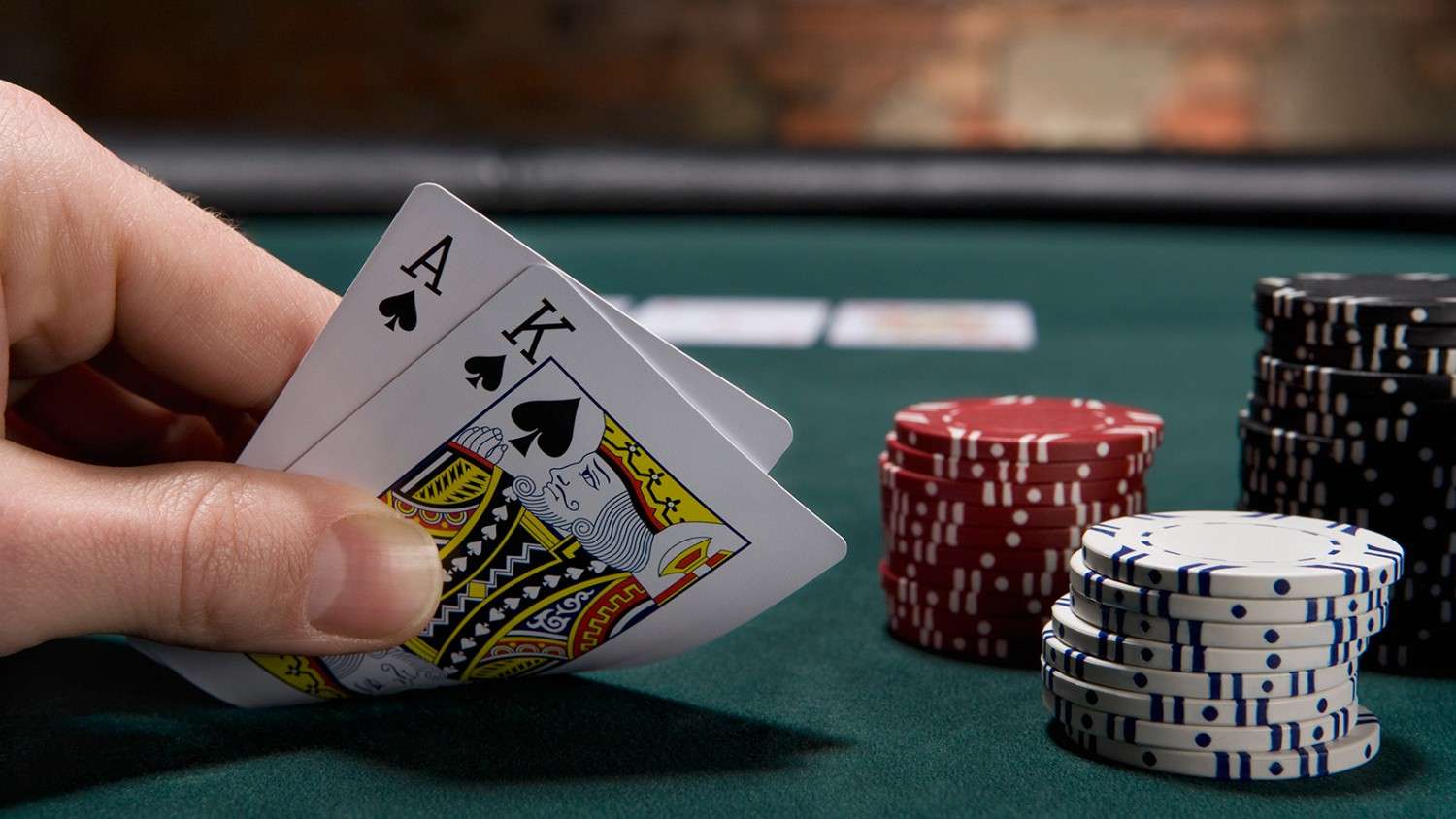
The goal is simple: get a hand value closer to 21 than the dealer, without going over 21 (busting).
Card values
| Card | Value |
|---|---|
| 2–10 | Face value |
| Jack, Queen, King | 10 |
| Ace | 1 or 11 (whichever benefits your hand) |
A hand containing an Ace counted as 11 is called a "soft" hand (e.g. Ace + 6 = soft 17). A hand without an Ace, or where the Ace must count as 1 to avoid busting, is a "hard" hand.
How a hand plays out
- You place your bet
- You receive two cards face up. The dealer receives one card face up and one face down (the "hole card")
- You decide how to play your hand (hit, stand, double down, or split — explained below)
- Once you're done, the dealer reveals their hole card and plays according to fixed rules
- If your hand beats the dealer's without busting, you win. If you bust, you lose regardless of what the dealer has
Your options
| Action | What it means |
|---|---|
| Hit | Take another card. You can hit as many times as you want until you stand or bust. |
| Stand | Keep your current hand. No more cards. |
| Double down | Double your bet and receive exactly one more card. Used when you have a strong position. |
| Split | If your first two cards are the same value (e.g. two 8s), split them into two separate hands, each with its own bet. |
| Insurance | A side bet offered when the dealer's face-up card is an Ace. Pays 2:1 if the dealer has blackjack. Generally a bad bet — skip it. |
Dealer rules
The dealer doesn't make decisions — they follow fixed rules. In most UK casinos and online games:
- Dealer must hit on 16 or below
- Dealer must stand on 17 or above (some games require the dealer to hit soft 17 — check the table rules)
Blackjack (natural 21)
If your first two cards are an Ace and a 10-value card, you have blackjack. This pays 3:2 (£15 on a £10 bet) in most games. If the dealer also has blackjack, it's a push (tie) and your bet is returned.
Some tables pay 6:5 instead of 3:2 for blackjack. Avoid these — the reduced payout significantly increases the house edge.
Basic strategy — the moves that cut the house edge
Basic strategy is a set of mathematically optimal decisions for every possible combination of your hand and the dealer's face-up card. It tells you exactly when to hit, stand, double down, or split.
You don't need to memorise it — you can use a strategy chart at the table (most casinos allow this, and all online games give you time to check). The point is that every decision in blackjack has a mathematically correct answer, and basic strategy gives you all of them.
Simplified basic strategy rules
These cover the most common situations:
💾 Save or screenshot this table
Hard totals (no Ace, or Ace counted as 1)
| Your Hand | Dealer Shows 2–6 | Dealer Shows 7–Ace |
|---|---|---|
| 8 or less | Hit | Hit |
| 9 | Double down | Hit |
| 10 | Double down | Double if dealer shows 2–9, otherwise hit |
| 11 | Double down | Double down |
| 12 | Stand (hit vs 2 or 3) | Hit |
| 13–16 | Stand | Hit |
| 17+ | Stand | Stand |
Soft totals (Ace counted as 11)
| Your Hand | Dealer Shows 2–6 | Dealer Shows 7–Ace |
|---|---|---|
| Soft 13–14 | Hit (double vs 5–6) | Hit |
| Soft 15–16 | Hit (double vs 4–6) | Hit |
| Soft 17 | Double vs 3–6, otherwise hit | Hit |
| Soft 18 | Stand (double vs 3–6) | Stand (hit vs 9, 10, Ace) |
| Soft 19+ | Stand | Stand |
Pairs
| Your Pair | Action |
|---|---|
| Aces | Always split |
| 8s | Always split |
| 10s | Never split |
| 5s | Never split — treat as hard 10 (double down) |
| 4s | Hit (split only vs 5 or 6 at some tables) |
| 2s, 3s, 6s, 7s | Split vs dealer 2–7, otherwise hit |
| 9s | Split vs 2–6 and 8–9, stand vs 7, 10, Ace |
This isn't the full strategy — there are edge cases and rule variations — but following these rules gets you 95% of the way to optimal play.
Blackjack odds and house edge
With basic strategy, the house edge in blackjack is approximately 0.5%. That makes it the best odds at any standard casino table game, alongside video poker. For a full comparison across all games, see our house edge explained guide.
Without basic strategy — playing on gut instinct — the house edge rises to around 2-3%. The difference between 0.5% and 2.5% might sound small, but over hundreds of hands it's significant.
Blackjack odds table
| Scenario | Approximate Probability |
|---|---|
| Getting blackjack (natural 21) | 4.8% (~1 in 21 hands) |
| Dealer busting | 28.4% |
| Push (tie) | ~8.5% |
| Player winning (all methods) | ~42.4% |
| Player losing (all methods) | ~49.1% |
The player loses more often than they win — that's where the house edge lives. But blackjack pays 3:2, and doubling down and splitting create situations where you win more money when you do win, which partially offsets the frequency disadvantage.
What the house edge costs you
At a 0.5% house edge with basic strategy, playing £10 per hand at 60 hands per hour:
- You wager £600 per hour
- Expected loss: £3 per hour
That's one of the cheapest forms of casino entertainment. By comparison, a 4% house edge slot at 400 spins per hour at £1 per spin costs £16 per hour in expected losses. Understanding this comparison is the practical value of knowing the odds behind every bet.
Playing blackjack at a casino
If you've never played blackjack in a physical casino, the experience can feel intimidating. A few things to know:
- Table minimums. Every table has a minimum bet displayed on a sign — typically £5-£25 in UK casinos. Start at the lowest minimum while you learn.
- Etiquette. Use hand signals for your decisions — tap the table for hit, wave your hand horizontally for stand. This protects both you and the dealer because the overhead cameras can see the gesture clearly.
- Speed. Live blackjack moves faster than you'd expect. If you need to check your strategy chart, that's fine — but have it ready. Nobody minds a few seconds, but searching your phone for 30 seconds per hand will slow the table.
- Chips. Buy chips at the table by placing cash on the felt (don't hand it to the dealer). Place your bet in the betting circle before the cards are dealt.
- Other players. In a physical casino, you're at a table with other players — but everyone plays against the dealer individually. Other players' decisions don't affect your odds (despite what some players believe). Don't let anyone pressure you about how to play your hand.
Side bets — why you should skip them
Most blackjack tables offer side bets: Perfect Pairs, 21+3, Insurance, Lucky Ladies. These have one thing in common — they all have significantly worse odds than the main game.
| Side Bet | Typical House Edge |
|---|---|
| Insurance | 7.4% |
| Perfect Pairs | 2-11% (varies) |
| 21+3 | 3-8% (varies) |
The main game offers 0.5% with basic strategy. Every side bet is at least 5-15× more expensive per pound wagered. Side bets are where casinos make their margin back from skilled players. The optimal strategy for side bets is simple: don't take them.
Bankroll management for blackjack
Blackjack has a low house edge but it's still a negative expectation game — you'll lose money over time. Managing your bankroll extends your playing time and keeps the experience enjoyable.
A standard guideline is to bring 30-50× your minimum bet to a session. At a £10 table, that's £300-£500. This gives you enough runway to absorb the natural swings without going bust in the first 20 minutes.
Set a loss limit before you sit down and stick to it. If you're ahead at any point, consider pocketing your original stake and playing only with winnings. Our bankroll calculator can help you set a budget based on your actual finances.
Frequently asked questions

Written by
David Burke
David is a gambling industry analyst and poker player based between London, Spain, and Malta. He has spent over a decade observing the European betting and casino landscape, with particular expertise in odds, probability, game strategy, and how the bookmaking industry works. At WiseStaker, David writes guides on bet types, game rules, and the mathematics behind gambling.
Follow on X →