Germany gambling statistics: participation, regulation, and industry data
Last updated: April 2026
Germany is one of Europe's largest gambling markets, but also one of its most restrictively regulated. The 2021 Interstate Treaty on Gambling (Glücksspielstaatsvertrag, GlüStV 2021) created a unified national licensing framework for the first time, overseen by the Gemeinsame Glücksspielbehörde der Länder (GGL). Despite these reforms, the black market remains a significant policy challenge, with industry estimates suggesting unlicensed operators capture up to 25% of the online market. This page draws on data from the GGL and the BZgA/Glücksspielsurvey to present the latest figures. For a broader view, see our statistics hub.
| Measure | Figure | Source |
|---|---|---|
| Gross gaming revenue (2024) | €14.4 billion | GGL Activity Report, 2025 |
| Gambling tax and levy revenue (2024) | ~€7 billion | GGL Activity Report, 2025 |
| Adult gambling participation (12-month, 2024) | 43% | Glücksspielsurvey 2024 (forsa) |
| Problem gambling prevalence (SOGS, 2024) | 0.28% pathological, 0.37% problematic | Glücksspielsurvey 2024 |
| Licensed operators supervised by GGL | 141 | GGL Activity Report, 2025 |
| Estimated black market GGR (2024) | €547 million | GGL / Blockchain Research Lab, 2025 |
Gambling industry revenue in Germany
Germany's licensed gambling market generated €14.4 billion in gross gaming revenue in 2024, a 5% increase over the prior year's figure and the strongest annual growth since the GlüStV 2021 took effect (GGL Activity Report, 2025). Tax and levy revenue from gambling reached approximately €7 billion, up from €6.6 billion in 2023. Licensed operators contributed approximately €4 billion to the regulated GGR, representing 28% of the total market (GGL, 2025). Lotteries remain the dominant segment by revenue, followed by land-based gaming machines (Spielhallen), casinos, and the growing online sports betting and casino segments. For comparison, see our Sweden gambling statistics.
Revenue by sector (2024, estimated)
| Sector | Estimated GGR (€ billions) | Notes |
|---|---|---|
| Lotteries (Deutscher Lotto- und Totoblock) | ~€7.5 | Largest single segment; includes Lotto 6aus49, Eurojackpot |
| Land-based gaming machines (Spielhallen) | ~€3.0 | Subject to strict technical standards |
| Casinos (land-based) | ~€0.8 | 70+ state-licensed casinos |
| Online sports betting | ~€1.5 | Licensed under GlüStV 2021 |
| Online slots (virtuelle Automatenspiele) | ~€0.8 | Licensed since 2021; €1/spin limit, €1,000/month deposit cap |
| Online poker | ~€0.2 | Licensed under GlüStV 2021 |
| Other (horse racing, secondary lotteries) | ~€0.6 | |
| Total licensed market | ~€14.4 | GGL Activity Report, 2025 |
Source: GGL Activity Report 2025; segment breakdown is approximate as the GGL does not publish a full vertical-by-vertical split. Lottery figures derived from DLTB reporting.
Licensed market GGR growth (2021–2024)
| Year | Licensed GGR (€ billions) | Year-on-year change |
|---|---|---|
| 2021 | ~€13 | GlüStV 2021 enters force |
| 2022 | ~€13.4 | +~3% |
| 2023 | ~€13.7 | +~2% |
| 2024 | ~€14.4 | +5% |
Source: GGL Activity Reports, 2022–2025.
Online gambling participation (% of adults)
| Year | Online gambling participation (% of adults) | Notes |
|---|---|---|
| 2019 | ~8% | Pre-regulation baseline |
| 2021 | ~9% | GlüStV 2021 takes effect |
| 2023 | ~10% | Licensing ramp-up |
| 2025 | ~11–12% | Glücksspielsurvey 2025 |
Source: Glücksspielsurvey 2025; BZgA series 2007–2019. Note: Germany's online participation lags most European markets; land-based activities dominate.
Despite the introduction of a national licensing framework in 2021, Germany's online gambling market remains relatively underdeveloped compared to the UK, Sweden, or Denmark. The GGL's strict regulatory requirements — including a €1 per spin limit on online slots, a cross-provider monthly deposit cap of €1,000, a mandatory five-second spin interval, and a prohibition on live casino games — have drawn criticism from operators who argue they drive players to the unlicensed market. The GGL estimates that unlicensed operators hold approximately 25% of the online gambling market, though industry analysts at H2 Gambling Capital put the figure substantially higher at around 60% in 2024.
How many people gamble in Germany?
The Glücksspielsurvey 2024, conducted by forsa with 11,503 representative interviews and continuing the long-running BZgA survey series, found that 43% of German adults had gambled at least once in the past twelve months (Glücksspielsurvey, 2024). This represents a slight increase from 2019, when the 12-month participation rate stood at approximately 40%, though the long-term trend since 2007 remains one of declining participation. Eighty per cent of respondents reported having gambled at least once in their lifetime.
Gambling participation by activity (2024/2025)
| Activity | Participation Rate (% of adults) | Source |
|---|---|---|
| Lottery products (Lotto, Eurojackpot) | ~40% | Glücksspielsurvey 2025 |
| Scratch cards (Rubbellose) | ~35% | Glücksspielsurvey 2025 |
| Retail sports betting | ~17% | Glücksspielsurvey 2025 |
| Online sports betting | ~7% | Glücksspielsurvey 2025 |
| Gaming machines (Spielhallen) | ~5% | Glücksspielsurvey 2024 |
| Online slots | ~4% | Glücksspielsurvey 2025 |
| Casino (land-based) | ~3% | Glücksspielsurvey 2024 |
| Online poker | ~2% | Glücksspielsurvey 2025 |
| Any gambling activity (12-month) | 64.9% (2025); 43% (2024 past-year) | Glücksspielsurvey 2024/2025 |
Sources: Glücksspielsurvey 2024 (forsa, VDAI-funded); Glücksspielsurvey 2025 (University of Bremen / ISD Hamburg). Note: The 64.9% figure from the 2025 survey uses a broader definition including any lifetime or past-year participation, while the 43% figure from the 2024 BZgA-continuation survey refers to past-12-month play.
Men have significantly higher gambling participation than women across all age groups up to 55, and are over-represented among those who gamble frequently or on multiple activities (Glücksspielsurvey 2024). Around 6.9% of the population (10.3% of men, 3.5% of women) participate in higher-risk gambling forms such as slots, casino games, sports betting, and keno (Glücksspielsurvey 2023).
Problem gambling in Germany
Two parallel survey series provide prevalence data for Germany, using different screening tools:
The Glücksspielsurvey 2024 (forsa, continuing the BZgA series) used the South Oaks Gambling Screen (SOGS) and found that 0.37% of all respondents were classified as "problematic" and 0.28% as "probably pathological" gamblers. Over 95% of respondents were non-problematic gamblers or non-gamblers. These figures have remained broadly stable since 2019.
The Gambling Survey 2023 (University of Bremen / ISD Hamburg, DSM-5 based) found a substantially higher rate: 2.3% of adults aged 18–70 met the criteria for gambling disorder (mild: 1.1%, moderate: 0.7%, severe: 0.5%).
The Glücksspielsurvey 2025 estimates 0.9% of adults meet criteria for pathological gambling, equating to approximately 630,000 people.
Problem gambling indicators by demographic
| Demographic Group | Indicator | Source |
|---|---|---|
| Men — risky gambling participation | 10.3% | Glücksspielsurvey 2023 |
| Women — risky gambling participation | 3.5% | Glücksspielsurvey 2023 |
| Adults 18–25 — gambling disorder (DSM-5) | 4.9% | Gambling Survey 2023 |
| Adults 18–25 — severe gambling disorder | 2.1% | Gambling Survey 2023 |
| All adults — SOGS problematic | 0.37% | Glücksspielsurvey 2024 |
| All adults — SOGS pathological | 0.28% | Glücksspielsurvey 2024 |
| All adults — DSM-5 gambling disorder (any) | 2.3% | Gambling Survey 2021 |
| Pathological gambling estimate (2025) | 0.9% | Glücksspielsurvey 2025 |
Sources: Glücksspielsurvey 2024 (forsa); Gambling Survey 2023 (University of Bremen / ISD Hamburg); Glücksspielsurvey 2025. Note: Divergent figures reflect different screening tools (SOGS vs DSM-5) and methodologies.
The most alarming trend is among young adults: severe gambling disorder prevalence among 18–25-year-olds tripled from 0.7% in 2021 to 2.1% in 2023 (Gambling Survey 2023). This has intensified political pressure for stricter regulation of online gambling advertising and marketing.
Treatment and help-seeking
Germany has a well-developed addiction treatment infrastructure, with gambling disorder covered under the national healthcare system. Outpatient and inpatient treatment is available through addiction counselling centres (Suchtberatungsstellen) nationwide. The BZgA operates a telephone helpline (0800 1 37 27 00, free and anonymous) and an online counselling service. The GGL's OASIS national self-exclusion system allows players to exclude themselves from all licensed online gambling providers. Three-quarters of the population (72%) have encountered information about gambling risks through some media channel (Glücksspielsurvey 2024).
If you're concerned about your own gambling, you can take our PGSI self-assessment quiz — a validated screening tool used internationally.
Germany gambling regulation
Gambling in Germany is regulated under the Interstate Treaty on Gambling 2021 (GlüStV 2021), which entered into force on 1 July 2021. For the first time, it established a unified national licensing framework for online gambling, managed by the GGL, the joint gambling authority of Germany's 16 federal states (Länder). Prior to the GlüStV 2021, Germany's online gambling regime was fragmented and largely prohibitive.
The GlüStV 2021 permits licensed online sports betting, online slots (virtuelle Automatenspiele), and online poker. Live dealer casino games and online table games such as roulette and blackjack remain prohibited for online operators. Land-based casinos, gaming halls, and lotteries continue to be regulated at the state level. The GGL is mandated to deliver a five-year evaluation of the GlüStV 2021 to the Bundestag, expected in 2026.
Key regulatory timeline
| Year | Event |
|---|---|
| 2008 | Interstate Treaty on Gambling (GlüStV) enters force — online gambling largely prohibited |
| 2012 | Schleswig-Holstein issues its own online gambling licences, diverging from other states |
| 2020 | Transitional "toleration regime" begins — online slots and poker permitted under conditions |
| 2021 | GlüStV 2021 enters force (1 July); GGL established as joint national regulator |
| 2022 | GGL begins issuing online sports betting, slots, and poker licences |
| 2023 | OASIS national self-exclusion register fully operational; 39 cross-border licences issued |
| 2024 | GGL reports 141 supervised providers; Google Ads restricted to licensed operators (September) |
Online gambling in Germany
Germany's licensed online gambling market is growing but constrained by some of Europe's strictest product restrictions. In Q1 2025, just under €1.1 billion was staked on online slots, with online poker stakes at €204 million. Combined stakes across online sports betting, slots, poker, and horse racing exceeded €3.5 billion in Q1 2025, falling to €3.2 billion in Q2 (GGL Quarterly Market Analysis, 2025).
The €1,000 per month cross-provider deposit limit, €1 per spin stake limit, mandatory five-second pause between spins, and prohibition on live casino and table games are the key constraints that differentiate Germany from other European markets. Industry body DSWV and leading operators argue these restrictions push players to unlicensed offshore sites.
Online market enforcement and licensing data (2024)
| Metric | Figure | Source |
|---|---|---|
| Licensed operators supervised | 141 | GGL Activity Report, 2025 |
| Permits and amendments processed (2024) | 230 | GGL Activity Report, 2025 |
| Illegal websites reviewed | 1,700+ | GGL Activity Report, 2025 |
| Prohibition proceedings initiated | 231 (up from 133 in 2023) | GGL Activity Report, 2025 |
| Illegal sites blocked (prohibition orders) | ~450 | GGL Activity Report, 2025 |
| Illegal sites blocked (DSA geo-blocking) | 657 | GGL Activity Report, 2025 |
| Estimated black market GGR | €547 million (77% channelisation) | GGL / Blockchain Research Lab, 2025 |
| Black market share of online market (GGL) | ~25% | GGL Activity Report, 2025 |
| Black market share of online market (H2GC) | ~60% | H2 Gambling Capital, 2025 |
The significant gap between the GGL's estimate of the black market (25% of online, 3–4% of total) and H2 Gambling Capital's estimate (60% of online revenue) remains one of the most contested data points in European gambling regulation. A GGL-commissioned study by the Blockchain Research Lab estimated black market GGR at €547 million in 2024, up 17% from €466 million in 2023, with a channelisation rate of 77% (GGL, 2025). Licensed operators dispute these figures and argue the true unlicensed market is substantially larger.
Young people and gambling
Gambling disorder among young adults in Germany is growing rapidly. The Gambling Survey 2023 (ISD Hamburg / University of Bremen) found that 4.9% of adults aged 18–25 met DSM-5 criteria for gambling disorder, up from 3.7% in 2021. Severe gambling disorder in this age group tripled from 0.7% to 2.1% over the same period (Gambling Survey 2023).
The legal gambling age in Germany is 18 for all forms of gambling. In 2023, the AGCO-style ban on athlete and celebrity endorsements in gambling advertising was not yet in place in Germany, though the GlüStV 2021 includes advertising time restrictions (no gambling ads between 6am and 9pm on television) and content rules. The rapid rise in youth gambling disorder has prompted calls for further advertising restrictions and enhanced age verification in the online environment.
Gambling harm and support
Gambling-related harm in Germany spans financial distress, relationship breakdown, mental health difficulties, and elevated suicide risk. The Glücksspielsurvey 2024 found that men are significantly over-represented among those experiencing gambling-related harm, particularly in the 18–35 age group.
Key support services include the BZgA gambling helpline (0800 1 37 27 00, free, anonymous), the OASIS national self-exclusion system for online gambling, over 1,500 addiction counselling centres (Suchtberatungsstellen) across Germany, and the German Association for Addiction Medicine (Deutsche Hauptstelle für Suchtfragen). Gambling disorder is recognised as a treatable condition under Germany's statutory health insurance system, with both outpatient and inpatient rehabilitation available.
For further guidance on recognising and managing gambling-related harm, visit our responsible gambling hub.
This page draws on the most recent data available from the GGL, the Glücksspielsurvey series (BZgA/forsa/ISD Hamburg), and peer-reviewed German gambling research. All figures are from official government, public health, or peer-reviewed sources as cited. Where competing prevalence estimates exist (SOGS vs DSM-5), both are presented with methodology noted. We will update this page as new data is published.
Need support?
 BZgA Gambling Helpline: 0800 1 37 27 00 (free, anonymous, German language). Online counselling: check-dein-spiel.de.
- OASIS Self-Exclusion: Register at oasis-spielersperrdatei.de to block yourself from all licensed online gambling providers.
 UK National Gambling Helpline: 0808 8020 133 (24/7) — free and confidential, operated by GamCare.
Frequently asked questions
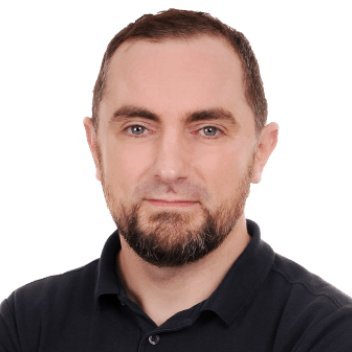
Written by
Ciaran McEneaney
Ciaran is a gambling industry writer based in Ireland with over a decade of experience covering the regulated betting sector. He specialises in gambling regulation, industry statistics, player protection, and responsible gambling policy. At WiseStaker, Ciaran covers UK and international gambling data, support resources, and the psychology behind gambling behaviour.
Follow on X →