How to play roulette: rules, bets, odds, and what you need to know
Roulette is one of the oldest and most recognisable casino games in the world — a spinning wheel, a bouncing ball, and a table covered in numbers. It's pure chance with no skill component, which makes it one of the simplest games to learn. But the range of bets available, and the differences between wheel types, mean there's more to understand than it first appears. This guide covers how the game works, every bet type, the odds, and how to play — whether online or at a physical casino.
How roulette works
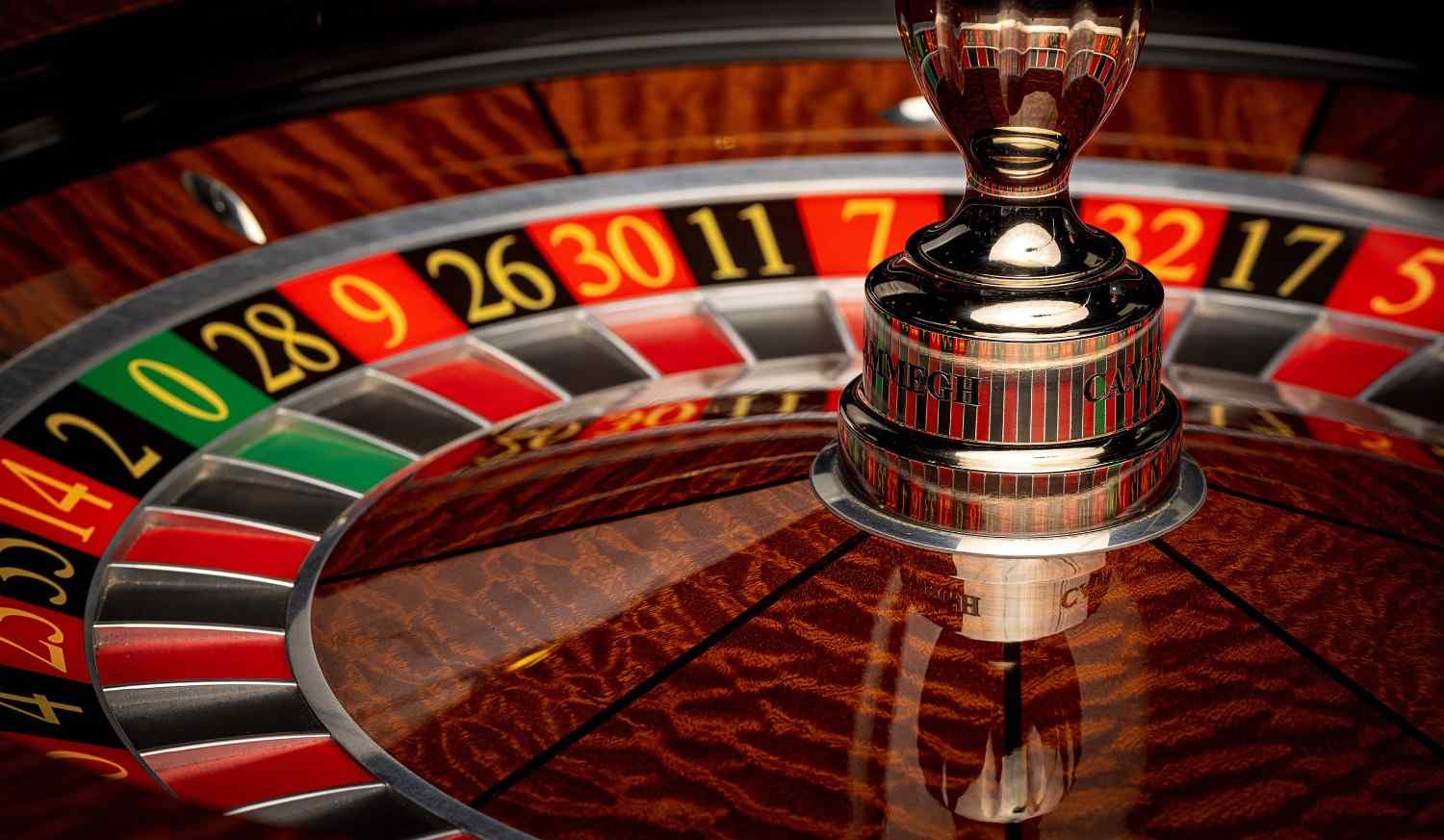
A roulette wheel contains numbered pockets: 1–36 (alternating red and black) plus one or two green zero pockets, depending on the variant. The dealer (or software) spins the wheel and drops a small ball in the opposite direction. The ball eventually lands in one of the pockets. Your job is to predict which one — or at least narrow down the range.
There are three main variants:
| Variant | Numbers | Zero Pockets | House Edge |
|---|---|---|---|
| European roulette | 1–36 + 0 | 1 (single zero) | 2.70% |
| American roulette | 1–36 + 0 + 00 | 2 (double zero) | 5.26% |
| French roulette | 1–36 + 0 | 1 (with La Partage rule) | 1.35% |
The difference matters. American roulette has nearly double the house edge of European because the extra zero pocket shifts the odds further against you. French roulette with the La Partage rule (half your even-money stake returned when the ball lands on zero) has the best odds at 1.35%. For a deeper comparison of how these edges stack up against other games, see our house edge explained guide.
Types of roulette bets
Roulette bets divide into two categories: inside bets (on specific numbers or small groups) and outside bets (on larger groups like red/black or odd/even).
Inside bets
| Bet | What It Covers | Payout | Probability (European) |
|---|---|---|---|
| Straight up | One specific number | 35:1 | 2.70% |
| Split | Two adjacent numbers | 17:1 | 5.41% |
| Street | A row of three numbers | 11:1 | 8.11% |
| Corner | Four numbers in a square | 8:1 | 10.81% |
| Six line | Two adjacent rows (6 numbers) | 5:1 | 16.22% |
Outside bets
| Bet | What It Covers | Payout | Probability (European) |
|---|---|---|---|
| Red / Black | All 18 red or black numbers | 1:1 | 48.65% |
| Odd / Even | All 18 odd or even numbers | 1:1 | 48.65% |
| High / Low | 1–18 or 19–36 | 1:1 | 48.65% |
| Dozens | 1–12, 13–24, or 25–36 | 2:1 | 32.43% |
| Columns | One of three vertical columns | 2:1 | 32.43% |
The payout and probability are inversely related — the more numbers you cover, the lower the payout but the higher your chance of winning. Every bet has the same house edge (2.70% on European), so no bet is mathematically "better" than another. The difference is purely in risk profile — high-risk/high-reward (straight up) vs low-risk/low-reward (red/black).
How to play roulette — step by step
At a casino
- Buy chips. Roulette uses special coloured chips — each player gets a unique colour so bets can be identified. Place cash on the table and the dealer exchanges it.
- Place your bets. Put chips on the table layout corresponding to the bet(s) you want. You can place multiple bets on the same spin.
- Wait for the spin. The dealer spins the wheel and drops the ball. There's a window to place and adjust bets until the dealer calls "no more bets."
- Collect or lose. The ball lands in a pocket. The dealer marks the winning number, clears losing bets, and pays winners.
- Repeat.
Minimum bets are displayed on a sign at each table — typically £1–£5 for outside bets and £1–£25 for inside bets.
Online
Online roulette works identically but with a random number generator (RNG) determining the result. Live dealer roulette uses a real wheel streamed via video. The rules and odds are the same either way.
The maths behind roulette
Why the house always wins
On a European wheel with 37 pockets (1–36 plus 0), a straight-up bet on any number should pay 36:1 to be fair — 36 losing pockets for every 1 winning pocket. But it pays 35:1. That missing unit is the house edge.
The same principle applies to every bet. Red covers 18 of 37 pockets (48.65%), but pays 1:1 as if it were 50/50. The gap between the true probability and the payout is always the same: 2.70% on European, 5.26% on American.
This means no bet, no combination of bets, and no pattern of bets can change the house edge. Every spin is independent. Past results have zero influence on future spins — which is the exact mistake the gambler's fallacy describes.
What the house edge costs you
At European roulette, betting £10 per spin at 30 spins per hour:
- You wager £300 per hour
- Expected loss: £8.10 per hour (2.70%)
At American roulette, the same pace costs £15.80 per hour — nearly double. Our house edge calculator shows exactly what any game costs over any number of bets.
Roulette strategies — do they work?
The short answer: no betting system can overcome the house edge in roulette.
The Martingale system
The most famous strategy: double your bet after every loss on an even-money bet (red/black). When you eventually win, you recover all losses plus one unit profit.
The problem: losing streaks of 7+ are not rare (roughly 1 in 128 sequences), and each doubling explodes the stake — £1, £2, £4, £8, £16, £32, £64, £128. One bad run hits the table maximum or wipes your bankroll. The Martingale changes the distribution of outcomes (many small wins, rare catastrophic losses) but does not change the expected value. The house edge applies to every spin regardless of your staking pattern.
Other systems
The Fibonacci, Labouchère, D'Alembert, and other progressive systems all have the same fundamental flaw — they rearrange how you win and lose but can't eliminate the house edge. For a full breakdown of why no betting system works mathematically, see our betting systems guide when it's available.
Roulette tips for beginners
Play European or French roulette. Never play American roulette if European is available — you're paying double the house edge for the same game. French roulette with La Partage is even better at 1.35%.
Stick to outside bets for longer sessions. Red/black, odd/even, and high/low give you close to 50/50 odds. You'll lose slowly and play longer. Inside bets are exciting but drain your bankroll faster.
Set a loss limit. Roulette is fast — 30+ spins per hour in a casino, much faster online. Set a session budget and stop when you hit it. Our bankroll calculator can help you work out what that budget should be.
Ignore the display board. Casinos show the last 10–20 results on a screen next to each table. This is not to help you — it's to encourage the gambler's fallacy. Past results don't influence future spins.
Don't bet on "sleeping" numbers. A number that hasn't appeared in 50 spins is no more likely to appear on spin 51. Every spin is independent.
Roulette vs other casino games
| Game | House Edge | Skill Component | Speed |
|---|---|---|---|
| French roulette (La Partage) | 1.35% | None | Medium |
| European roulette | 2.70% | None | Medium |
| Blackjack (basic strategy) | 0.50% | Yes — strategy reduces edge | Medium |
| Baccarat (banker) | 1.06% | None | Medium |
| American roulette | 5.26% | None | Medium |
| Online slots (average) | 3–5% | None | Very fast |
Roulette sits in the middle — better than slots and American roulette, worse than blackjack with strategy and baccarat. If the house edge matters to you, the odds calculator can help you compare implied probabilities across different bets and games.
Frequently asked questions

Written by
David Burke
David is a gambling industry analyst and poker player based between London, Spain, and Malta. He has spent over a decade observing the European betting and casino landscape, with particular expertise in odds, probability, game strategy, and how the bookmaking industry works. At WiseStaker, David writes guides on bet types, game rules, and the mathematics behind gambling.
Follow on X →